Coming Home
Part 3: Who is Dan Poulsen...and where's he going with this?

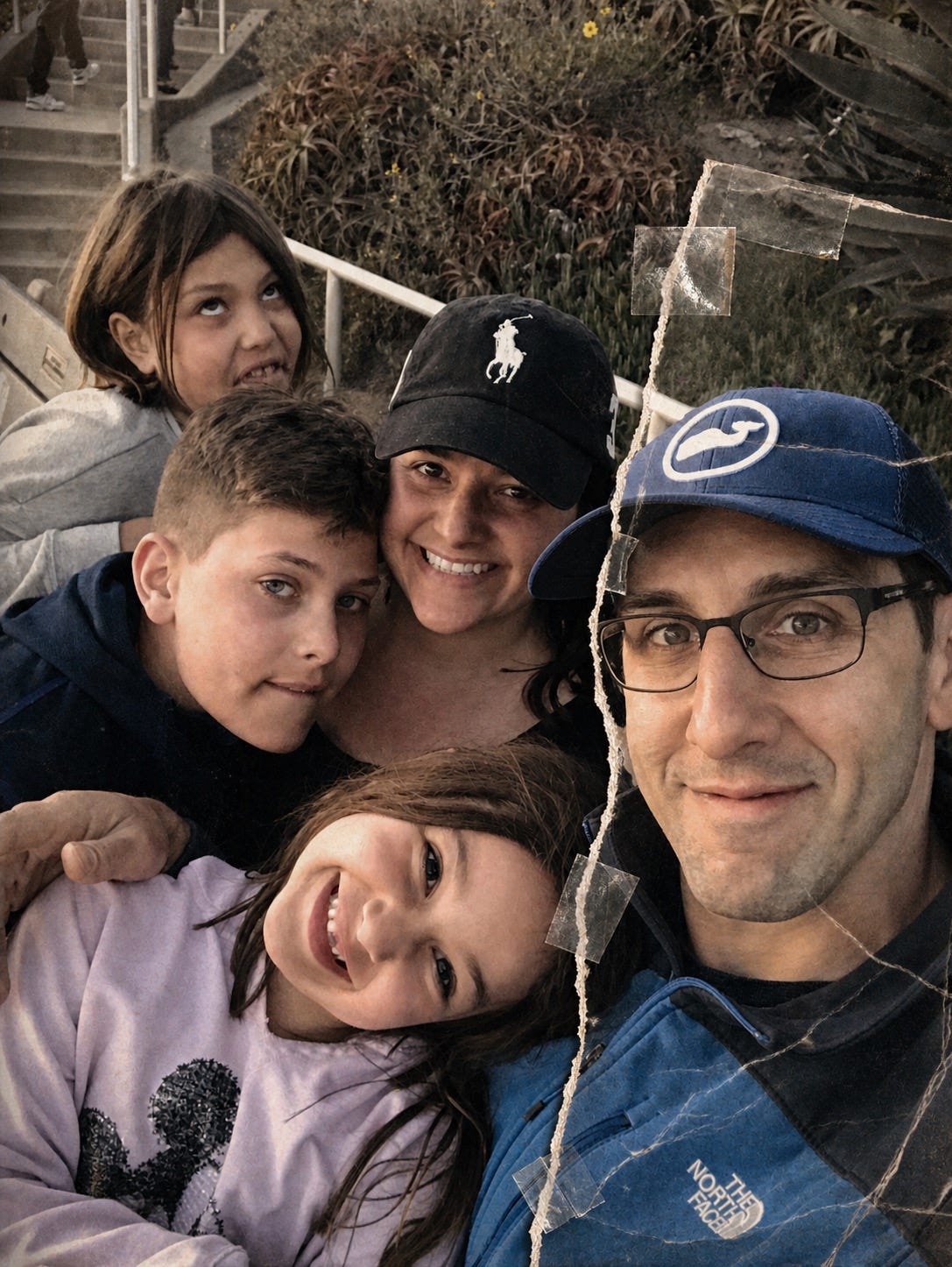
Surprisingly, med school held some of the best years for our family. We had very little, but because we were extremely frugal, had a modest mortgage, my PT license from undergrad, our nest egg (that we cracked and poached), and President Obama’s medicaid expansion, we made it through those 4 years relatively unscathed. Additionally, Upstate NY has a lot to offer a young family of 5. Between the YMCA and other great New York programs like the Syracuse children’s theater and ISKI NY our kids had a lot of great opportunities, like learning how to ski on ski-swap equipment each winter at a mountain just minutes from our house for pennies on the dollar. The med school schedule was also surprisingly conducive to being the kind of dad I didn’t have myself, with a little bit of adjusting. Yes, most nights after we put the kids to bed I stayed up ‘til 1am studying. But overall we made it work.
For residency I decided on something conducive to being a father and husband. Ortho, I assessed, would be too much time away from my family. I discovered radiology. A challenging and noble profession focused on deep knowledge of anatomy translated to diagnosis. Radiology quickly led serendipitously to a Vascular Interventional Radiology rotation my second month in residency. To me, IR was a little understood, but soon-to-be revealed, powerful and bewitching specialty with cutting edge treatments and cures for diseases like osteoarthritis, cirrhosis and uterine fibroids containing dramatic effects.
My passion for interventional radiology was immediate once being exposed to it. And by sheer luck, I was chosen to join the integrated program despite the other 4 extremely qualified and motivated candidates. Thank God. I originally wanted nothing to do with IR, due to my suspicion that it would pull me away from my family. But that familiar surgical bug got me quickly. During that first rotation as a very green resident, despite my original lack of interest, I was pretty quickly finding myself reviewing the steps before every procedure I was allowed to participate in with the tech outside the room (thanks Blaine and Steve). The faculty who granted me the opportunity for this training knew better than I did what I was built for.
I finish VIR residency. I’m in my 40’s. I trained in Virginia and we wanted to stay in the US South Atlantic because that’s the region my wife and I love. We also wanted to stay in Richmond for ourselves and for the kids. Sunshine and continuity are important to us. But, nothing was available. With a specialty as small as IR, timing is everything. But, we still had a few great options and chose an extremely friendly and intelligent group of men and women outside Charlotte. Their tenured IR’s were welcoming and supportive people. However, they’ve largely been doing drains, once-in-a-great-while GI bleeds and an occasional elective renal tumor ablation for the last 30 years, which they and the hospital they served were content with. I discuss this practice in my post “You’re first job is your second residency”.
Another young and newly trained vascular interventional radiologist joins the group at the same time as I do. It was slow at first, but with dedication and a lot of hard work, we had significant success. I focused on building the women’s health service line while my partner started a PAE program from the ground up. By the time we were 13 months in, I was doing multiple elective embolizations a day, we set up a new PERT team with Interventional Cardiology, I had completed 5 TIPS within the two months ending my first year at the practice, and boot strapped togetehr an ad hoc clinic service to facilitate longitudinal care of our patients as well as daily rounding with functional E/M. We turned a 95%/5% VIR/DR program into a flipped scenario of nearly 100% VIR except for DR call. I was Available, Affable and Able. My partner was smarter. He was leaving at 5pm. He was available, but not at the cost of his family.
Here is where I get very real. I did all this working 60-70 hours per week. But, the hours weren’t the real problem. Even when I wasn’t rounding, scrubbed in, reading DR, or seeing patients in clinic, I was never truly “off”. Yes, I was home, but my wife would say “You’re thinking about work, aren’t you?” And I was…ev-er-y time. Because here’s what you’re not told when you’re going to build and modernize an IR program centered on real clinical care in a traditional mixed IR/DR group structure that had never previously needed to support that kind of practice: no one really knows what’s necessary to build it and no one has the same immense desire that you do for it to succeed.
That’s not any individual’s fault; it’s just the way Interventional Radiology developed out of, and has now outpaced, most of the traditional real-world radiology groups we’re joining after residency and fellowship. And for a guy who grew up with nothing because men either leave or abdicate their responsibilities, I had an unreasonable, primal and visceral fear of failure. There are beliefs baked in you when you grow up like I did. Being hungry the last few days of the month because there’s nothing left in the cupboard and the checks don’t drop ‘til the 1st of the month; it does something to your ability to assess risk appropriately. Life becomes an all or nothing proposition. Great skills and motivation for a perfectionist on a wrestling team, football field or in medical school. As an adult navigating the real world, this takes the form of an illogical fear, success is all on you, and failure is not an option.
So what did that look like? Lot’s and lots of work outside of clinical care, procedures and diagnostic radiology duties. Some examples include:
Writing protocols and manuals for technologists how to set up the room and prep the equipment. And then staying late at work to review and make sure they’re ready to go the next day. And then coming in early the next day to ensure the equipment instructions you gave them are being followed.
Creating and delivering education sessions for the nursing staff to know how to monitor the patient’s pre-/post- and intraprocedure.
Meeting with the supervisors, mid-level admins, and hospital executives to ensure they understand the program and its financial impact so they understand that it’s economically advantageous to purchase the equipment, hire the staff, give the space, and motivate IT to create the order set and billing codes in Epic.
Monitoring and ensuring catheters, wires and sheaths were available.
Calling the ICU at night to make sure that the heparin drip was actually started.
To be honest, even with all the above. I was grateful for the opportunity and I would’ve kept going. I ignored my better judgment and did the work to facilitate program expansion and service lines that really required a staff of 3-5 people and another 2-3 years to build at a reasonable pace.
But instead, I let my family pay the price. Present at home physically, but still at work mentally. As I described above, I was consumed. My intentions were well placed, but my decision to do it on my own, right now and in an environment not yet built to handle it resulted in me choosing to neglect my family.
Last September was a wake up call. I met several respected leaders at the Strategic Radiology fall summit. They opened my eyes up to a lot. First, they told me what it looks like to grow an IR program within an environment that was grown over time by many physicians aligned in the effort, preserving balance. They were leaders within groups creating and growing interventional radiology service lines in a culture shared with the entire group.
The group I had joined were excellent clinicians. But they were of a different mindset, culture, expectations and goals. Rather than see or understand that, as I should have, I decided to just do the work myself. I gave all the time, effort, energy and attention necessary to make it successful. But who paid? My family. I was losing them and I was ignoring them while they were begging me to stop. Something had to change. It was either the practice or my family, the ones who always supported me. Last summer and fall were when I slowly decided something had to be sacrificed. And it wasn’t going to be my family anymore.
So, the partners in my small mixed radiology group were gracious. They were supportive in facilitating the winding down of my practice in a way that preserved patient care.
In the months since the late fall of 2025, I’ve had dozens of hours back with my family. I’ve spent more time listening and being present than I had since my oldest was 10 years of age (by this time he was 20). This past January I was in the living room with my youngest daughter, Clara. She looked over at me after we finished reading the Hobbit together for the second time and said “Dad, it’s nice having you back.” That was the most bitter sweet moment of my entire life to this point. The little girl who’s hand I could once easily hold in the crease of my palm. One of the three smartest and beautiful women in the world, who I adored, told me in one phrase how I had been gone…for over a year. I still have a hard time writing and thinking about this as I sit here typing.
So, Who is Dan Poulsen?
A kid who learned early he had to do it all on his own because no one was coming.
A guy who didn’t unlearn that lesson despite the men who contributed to his life along the way.
A nearly failed father and husband, but for the grace God, his wife and children…and a few caring mentors.
A guy who loves interventional radiology and the transformation it brings to the lives of patients.
A guy who knows how to build programs quickly and successfully. But has learned that quickly is much much much less important than doing it in the right place and time and in the right environment.
So that’s what brought me to February of 2026 and starting a new chapter.
I initially started Built In IR as a catharsis and homing beacon asking:
“Who out there feels like me?” Mismatched with the real world, trained for a setting that doesn’t seem to exist. It turned out, there were quite a few of us.
My search for others, and finding them, quickly developed into asking:
“Who’s building excellent life-changing vascular interventional radiology programs?” Because I’ve learned, I can’t do it alone, none of us can.
Built In IR is about doing those two things. Bringing dedicated clinicians together who are experiencing the same thing, a mismatch in the health care system and then connecting them with others who are sharing their insight on how they’re navigating it.
For the foreseeable future I’m asking respected IR’s from around the country to come and be seen and to share their knowledge and wisdom; so that other like minded and passionate IR’s who are also interested in learning from them can.
Because the truth is, somebody is coming, you just have to look in the right direction and ask the right questions to find them…sometimes you’ll find they were standing there the whole time.